
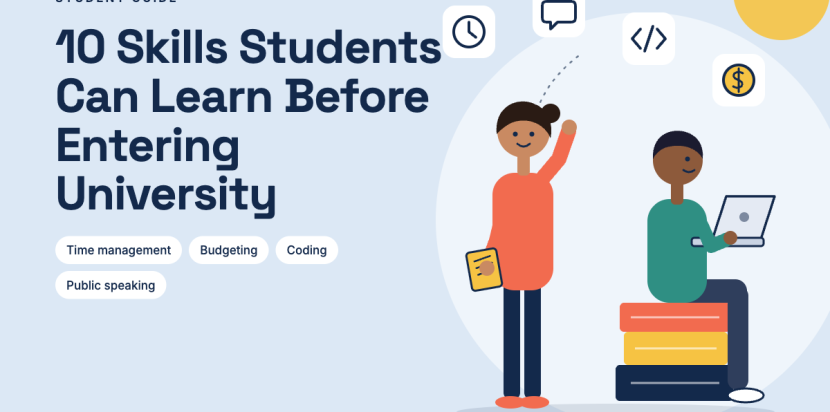
The months between your A-Levels, IB or polytechnic finals and your first day of university can feel like a strange in-between. Exams are over, but lectures haven’t started. It’s tempting to spend the whole break resting, and some rest is well deserved. But a little of that time spent building practical skills can make your first year far smoother, and it can also strengthen your applications for scholarships, internships and student programmes.
Here are 10 skills worth picking up before you enter university, along with simple ways to start learning each one. If you’re also exploring funding options for your studies, find out more about the Singapore Industry Scholarship.
1. Time management and self-discipline
University gives you far more freedom than school. There are no teachers checking your homework every day, and your timetable may have large gaps between classes. Without a system, deadlines can creep up quickly.
How to start:
- Use a digital calendar to plan your week, including rest and social time
- Try simple methods such as time-blocking or the Pomodoro technique (25 minutes of focus, then a short break)
- Break large tasks into smaller steps with their own mini-deadlines
Building this habit early means you’ll spend less time cramming and more time actually enjoying campus life.
2. Personal finance and budgeting
For many students, university is the first time they manage their own money, whether it’s an allowance, part-time income, a bursary or scholarship stipend. Knowing how to budget, save and avoid unnecessary debt is a life skill that pays off for years.
How to start:
- Track your spending for a month to see where your money goes
- Set up a simple budget using the 50/30/20 rule (needs, wants, savings) as a starting point
- Learn the basics of saving, interest and scams with resources from MoneySense, Singapore’s national financial education programme
If you’d like to earn some extra income while studying, read our guide on how university students can earn extra income through private tutoring.
3. Communication and public speaking
From tutorial discussions and group presentations to scholarship and internship interviews, you’ll be expected to share your ideas clearly and confidently. Strong communicators also tend to stand out to employers and selection panels.
How to start:
- Practise explaining a topic you know well in two minutes, then record and review yourself
- Join a debate club, youth group or public speaking community such as Toastmasters
- Volunteer to lead a presentation or event in a community group you’re part of
4. Academic writing and research
University essays and reports are very different from school compositions. You’ll need to find credible sources, build a clear argument, cite properly and avoid plagiarism.
How to start:
- Read long-form articles and opinion pieces, and notice how writers structure their arguments
- Learn a referencing style such as APA or MLA, and try a free reference manager like Zotero
- Practise summarising a news article in your own words in 150 words or fewer
5. Basic coding and data literacy
You don’t need to be a computer science student to benefit from coding. Basic programming and data skills are increasingly useful in fields from business and engineering to healthcare and the social sciences.
How to start:
- Try a free beginner course such as Harvard’s CS50 or the computing lessons on Khan Academy
- Learn basic Python, which is widely used for data analysis and automation
- Practise reading charts and simple statistics so you can interpret data critically
6. Spreadsheets and digital productivity tools
Many internships and part-time jobs assume you can work comfortably with spreadsheets, slides and shared documents. These skills also make group projects much easier to manage.
How to start:
- Learn core spreadsheet functions such as SUM, IF, VLOOKUP or XLOOKUP, and pivot tables
- Practise making clean, simple presentations with clear headings and visuals
- Get comfortable with collaboration tools like shared drives, comments and version history
7. AI literacy
AI tools are now part of everyday study and work. Knowing how to use them responsibly, and how to check their output, is quickly becoming an essential skill.
How to start:
- Experiment with AI tools for brainstorming, summarising or explaining difficult concepts
- Always fact-check AI-generated information against reliable sources
- Read your university’s policy on AI use in assignments so you understand what is allowed
Used well, AI can help you learn faster. Used carelessly, it can lead to errors or academic integrity issues, so it pays to build good habits early.
8. Networking and professional etiquette
University is a great time to start building relationships with lecturers, seniors, alumni and industry professionals. These connections can lead to mentorships, internships and job opportunities later on.
How to start:
- Create a simple, professional LinkedIn profile with your education, CCAs and achievements
- Learn how to write a polite, concise professional email
- Attend career fairs, talks and open houses, and practise introducing yourself in 30 seconds
If you’re considering a scholarship with an industry partner, these skills will also help you prepare for interviews and engage confidently with potential sponsors. Learn more about the Singapore Industry Scholarship and keep an eye on our latest news for updates.
9. Independent living skills
Whether you’re staying in a hall, studying overseas or simply spending long days on campus, basic life skills make a big difference. Being able to cook simple meals, do your laundry and handle everyday admin builds confidence and independence.
How to start:
- Learn three or four simple, healthy recipes you can cook on a budget
- Take charge of small admin tasks, such as booking appointments or paying bills
- Practise basic first aid and know where to get help on campus if you need it
10. Resilience and adaptability
University comes with new challenges: tougher modules, unfamiliar environments, setbacks in applications and, sometimes, personal difficulties. Students who can adapt, ask for help and bounce back tend to thrive in the long run.
How to start:
- Try something new and slightly uncomfortable, such as a new sport, language or volunteering role
- Reflect on past setbacks and what helped you get through them
- Build a support network of friends, family and mentors you can turn to
Life experiences can shape these skills in unexpected ways. Read more about the important life skills young adults learn when supporting their families through loss.
Where to find more learning opportunities
You don’t need to spend a lot of money to build these skills. Free online courses, community programmes and volunteering opportunities are widely available. A few places to start:
- MySkillsFuture for career exploration tools, skills insights and course listings
- Youth Corps Singapore for volunteering and leadership opportunities
- Coursera and Khan Academy for free or low-cost online courses
If you’re researching how to fund your studies, this roundup of the best online resources for finding scholarships in Singapore is also a helpful read.
Final thoughts
You don’t have to master all 10 skills before your first semester. Pick two or three that matter most to you, whether that’s budgeting, coding, writing or public speaking, and work on them steadily. These small investments now will help you settle into university more easily, make the most of your studies, and stand out when you apply for scholarships, internships and your first job.
Have questions about the Singapore Industry Scholarship? Get in touch with us.
Frequently Asked Questions
What is the most important skill to learn before university?
There’s no single answer, but time management is a strong place to start. University gives you more freedom and less structure than school, so being able to plan your time and meet deadlines makes every other part of student life easier.
How can I learn these skills for free?
Many of these skills can be learnt for free through online platforms such as Khan Academy, CS50 and Coursera’s free courses, as well as government resources like MoneySense and MySkillsFuture. Volunteering, CCAs, part-time work and community groups are also excellent ways to build communication, leadership and resilience.
Do these skills help with scholarship applications?
Yes. Scholarship panels typically look beyond grades at qualities such as leadership, communication, initiative and character. Skills like public speaking, networking, writing and resilience can help you write stronger applications and perform better in interviews.
How much time should I spend learning new skills during my break?
A few hours a week is usually enough to make steady progress. Focus on consistency rather than intensity, and leave plenty of time to rest, spend time with family and friends, and recharge before university begins.
Should I learn coding even if I’m not studying computing?
It can be very useful. Basic coding and data skills help in many fields, including business, engineering, science and the social sciences. Even a short beginner course can help you think more logically and work more efficiently with data.
Can I use AI tools for my university assignments?
It depends on your university and each module’s rules. Many institutions allow AI for certain tasks, such as brainstorming, but have strict policies on submitting AI-generated work. Always check your university’s guidelines and fact-check anything an AI tool produces.